
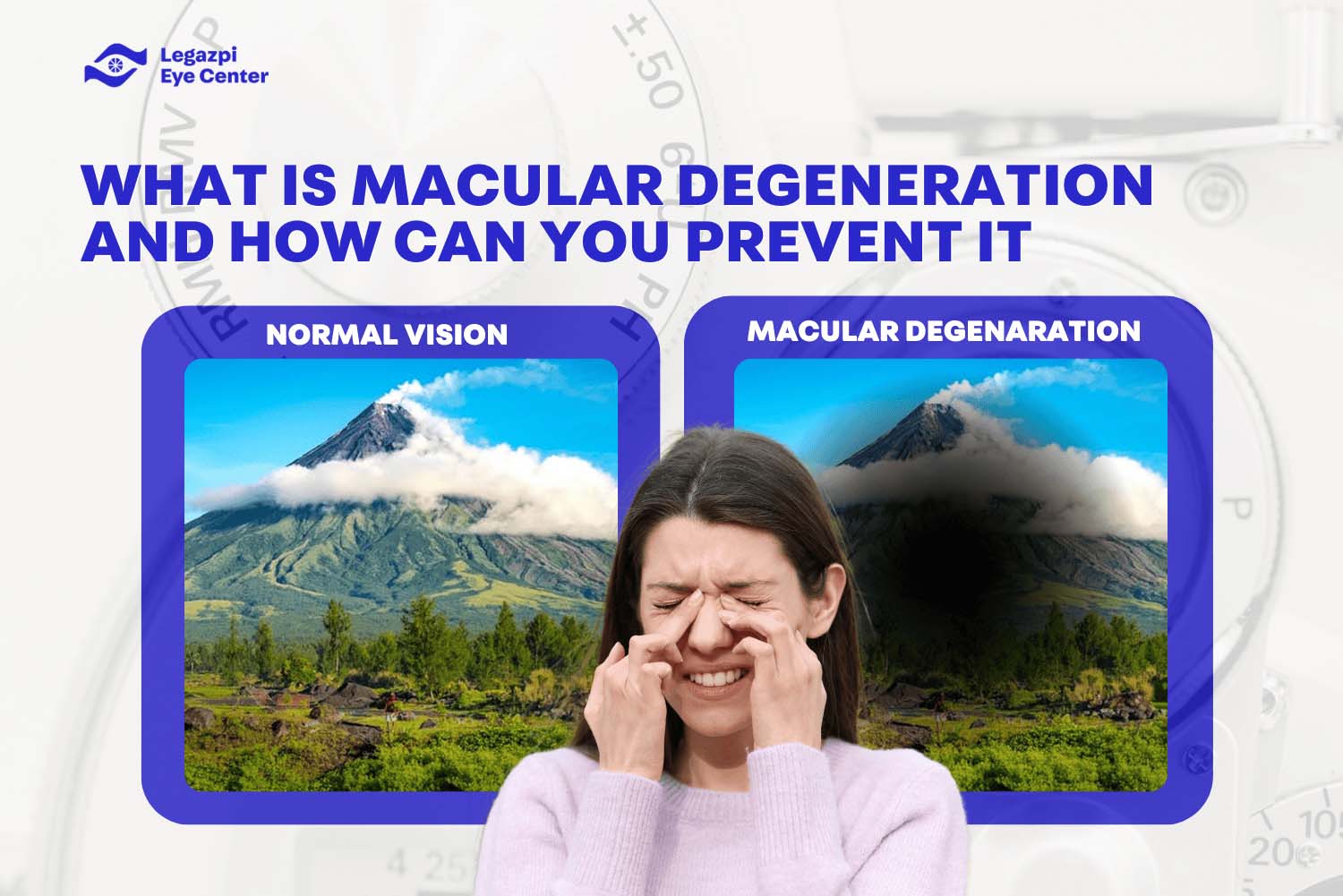
Macular degeneration is a major cause of vision loss, especially among older adults. Let’s discuss macular degeneration, its forms, risk factors, and, most importantly, preventative actions you can take.
What is macular degeneration?
Macular degeneration, also known as age-related macular degeneration (AMD), affects the macula—a small central part of the retina responsible for sharp, central vision. This vision is essential for tasks like driving, recognizing faces, and reading. As AMD progresses, it damages the macula, leading to image distortion, impaired vision, and, eventually, significant vision loss.
The most common type of macular degeneration is dry AMD, which develops slowly and may not cause symptoms at first. It is marked by yellow deposits called drusen that form under the retina. Over time, it can worsen and lead to geographic atrophy, a more advanced stage that causes significant vision loss.
A less common but more aggressive form is wet AMD. This happens when abnormal blood vessels grow under the retina, leaking fluid and blood. Unlike dry AMD, wet AMD can cause rapid vision loss if not treated quickly.
Macular Degeneration Risk Factors
- Old age
- A family history of AMD
- Smoking
- Extended UV light exposure
- Imbalanced diet without fruits, vegetables, and antioxidants
- Being overweight or obese
- Cardiovascular disease like hypertension or heart disease
Macular degeneration can significantly impact your quality of life, but making healthy choices can help protect your vision. Here’s what you can do:
- Quit Smoking: This is the most important step you can take to lower your risk.
- Eat a Healthy Diet: Focus on leafy greens like spinach and kale, along with foods rich in omega-3 fatty acids, such as fish.
- Maintain a Healthy Weight: If you are overweight, losing extra pounds can help reduce your risk.
- Protect Your Eyes from UV Rays: Wear sunglasses that block UV rays whenever you’re outdoors.
- Get Regular Eye Exams: Early detection is key. Routine eye check-ups can catch early signs of AMD, allowing for timely treatment and management.
- Manage Other Health Conditions: Keep conditions like diabetes, high blood pressure, and high cholesterol under control.
- Consider Supplements: Some studies suggest that vitamins like lutein and zeaxanthin may slow AMD progression. Talk to your doctor before taking any supplements.
Taking these steps early can help safeguard your vision. If you have concerns about your eyesight, schedule a visit with an eye care specialist. Your eyes are worth it!
References:
Age-related Macular Degeneration Market Report to 2032. Retrieved from:
https://www.factmr.com/report/age-related-macular-degeneration-market American Academy of
American Academy of Ophthalmology (AAO). (n.d.). Macular degeneration. Retrieved from: https://www.aao.org/eye-health/diseases/macular-degeneration-amd
BrightFocus Foundation. (n.d.). Macular degeneration. Retrieved from https://www.brightfocus.org/macular
National Eye Institute (NEI). (n.d.). Age-Related Eye Disease Study (AREDS). Retrieved from: https://www.nei.nih.gov/research/clinical-studies/age-related-eye-disease-study-areds
National Eye Institute (NEI). (n.d.). Age-related macular degeneration (AMD). Retrieved from: https://www.nei.nih.gov/learn/eye-diseases-and-conditions/age-related-macular-degeneration-a md
Ophthalmology (AAO). (n.d.). Amsler grid. Retrieved from: https://www.aao.org/eye-health/tips-preventing-eye-disease/amsler-grid