

You’re out in the sun, at the beach, on the road, or working outdoors. After a while, you notice your eye stays red. It doesn’t go away. Then a small, fleshy growth starts to appear.
It’s not painful at first but it slowly becomes more noticeable.
This could be pterygium.
What is Pterygium?
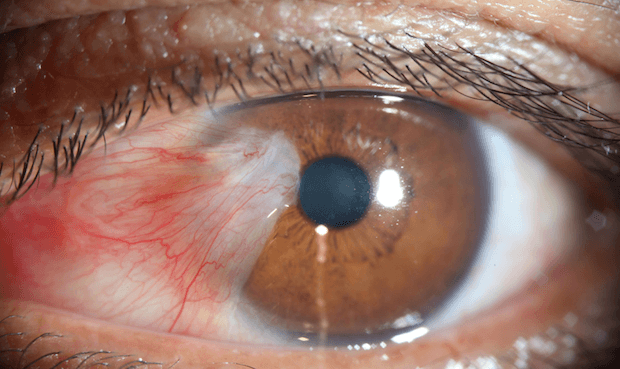
Pterygium (often called “surfer’s eye” or pugita sa mata) is a common eye condition, especially in tropical countries like the Philippines.
It’s a non-cancerous growth that starts on the white part of the eye and can extend toward the cornea. It usually begins near the inner corner and slowly grows inward.
Most of the time, it’s harmless but if it gets bigger, it can affect your vision.
Why does it happen?
Pterygium is strongly linked to long-term exposure to the environment, especially:
- Sunlight (UV rays)
- Dust and wind
- Dry conditions
- Spending a lot of time outdoors without eye protection
That’s why it’s more common in people who work outside like farmers, fishermen, and construction workers.
Signs to watch out for
At first, you might not notice anything. But as it grows, you may experience:
- Redness that doesn’t go away
- A visible fleshy growth on the eye
- Dry or gritty feeling
- Itching or burning
- Tearing
In more advanced cases:
- Blurred or distorted vision
- Astigmatism (due to changes in cornea shape)
How is it treated?
Treatment depends on how severe it is:
Mild
- Lubricating eye drops (artificial tears) to ease dryness
Moderate
- Anti-inflammatory drops to reduce redness and irritation
Advanced
- Surgery may be needed if:
- Vision is affected
- The growth keeps getting bigger
- Symptoms don’t improve
Even after surgery, it can still come back—so prevention is important.
Can you prevent it?
You can’t completely prevent pterygium, but you can lower your risk:
- Wear UV-protective sunglasses (even on cloudy days)
- Limit sun exposure, especially from 10 AM–2 PM
- Protect your eyes from dust and wind
- Use artificial tears if your eyes feel dry
- Get regular eye check-ups
If you’re often outdoors, eye protection makes a big difference.
When should you see an eye doctor?
Don’t wait it out if you notice:
- A growing tissue on your eye
- Ongoing redness or irritation
Early check-up = easier management and better protection for your vision.
References
American Academy of Ophthalmology. (2022). What is a pinguecula and a pterygium (surfer’s eye)? Retrieved from https://www.aao.org/eye-health/diseases/pinguecula-pterygium
American Optometric Association. (n.d.). Pterygium. Retrieved from https://www.aoa.org/healthy-eyes/eye-and-vision-conditions/pterygium
Better Health Channel. (n.d.). Pterygium. Retrieved from https://www.betterhealth.vic.gov.au/health/conditionsandtreatments/pterygium
Cleveland Clinic. (2024). Pterygium (surfer’s eye). Retrieved from https://my.clevelandclinic.org/health/diseases/22497-pterygium-surfers-eye
Sarkar, P., & Tripathy, K. (2023). Pterygium. In StatPearls. Retrieved from https://www.ncbi.nlm.nih.gov/books/NBK558907/